• Skip to primary navigation
  • Skip to main content

SailFun

providing information for sailors

  • Home
  • Sailing Clubs
  • Sailing Businesses
  • About
  • Contact us
  • Blog
    • Article and Press Releases
  • News
  • Advertise here

Learning to Sail

Finding the right destination to suit your level of sailing

August 8, 2012 by guestblogger Leave a Comment

There’s never been a better time to get into sailing and if you get the chance to go on your sailing vacations with friends or rent a yacht charter for your family then jump at the opportunity because, before you know it, you’ll be hooked.

Like anything, practice makes perfect and sailing presents many challenges for both crew and skipper. Obviously, one of the first challenges is knowing where to start and with this in mind I’ve highlighted a few locations that I feel will take you from landlubber to skipper in the space of a few hundred nautical miles.

So, set your captain’s hat at a jaunty angle, pump your bilges and find out what it takes to become a Level 3 sailor and what you’ll have to do to achieve success.

Level: Novice

To reach the heady heights of novice you’ll be a newbie to sailing or only undertaken a couple of voyages where you basically hung on for dear life or sunned yourself whilst the rest of the crew worked their barnacles off.

Ideal location: Greece

A great location for novices to learn to sail is the southern Ionian Sea around Greece where conditions are ideal for families and flotillas. Beach clubs such as Vounaki offer excellent facilities and with the summer breeze ranging from 0 – 15 knots, getting to grips with line-of-sight navigation, a basic knowledge of charts and understanding more about where to anchor are all achievable for the uninitiated on their sailing vacations.

Level: One

So, you’ve been on at least one or two flotilla training courses and you’ve skippered a yacht for over 100 nautical miles. You’re now classed as a Level 1 sailor, congratulations. No doubt you’ll be chomping at the main sails and ready to develop your strengths and learn new disciplines.

Ideal location: Croatia

As one of Europe’s ‘must sail’ regions, Croatia is regarded as the perfect place to practice coastal cruising and easy island hopping. The Dalmatian coast is as good as it gets and with crystal clear waters and a warm breeze, reaching up to 20 knots, you’ll find plenty of opportunities to really take control. Thanks to a rich and varied heritage, Croatia is an excellent option for lazy days at sea interspersed with cultural sightseeing on land.

Level: Two

As a Level 2 sailor you’ll be well-versed with naval experiences and will have at least 10 days at sea under your belt and a couple of qualifications, namely the RYA day skipper and the ICC qualification. You’re almost at the top of your game but there’s always more to learn where yacht charters are concerned.

Ideal location: Caribbean

St Vincent’s, Grenada, St Lucia, these spice islands slide off the tongue quicker than honey off melon and if you’re a Level 2 sailor then you’re bound to view the tidal variations and strong currents as a challenge far too great to ignore. These sumptuous warm waters are ideal for understanding tidal flow, learning the significance of protected anchorages and navigating open waters in some simply stunning locations.

Level: Three

There’s no need to explain to you the jargon and the nuances of sailing as you’ll have over 400 nautical miles experience as well as qualifications such as the higher level RYA day skipper, the RYA coastal skipper and the higher level ICC qualification in your arsenal. Where’s left to sail that you haven’t already experienced?

Ideal location: UK

Good old Blighty with its ever changing weather, strong currents and large tidal variations. Regions such as the Solent, in the south coast of England, provide some exceptional challenges for Level 3 sailors as well as historic ports of call where maritime history buffs will be in their absolute element. With wind speeds reaching upwards of 25 knots and plenty of poor anchor holding grounds to test your grit, making a passage plan and taking part in racing around the Isle of Wight will be what you dream of.

Biog: Chris is the father of two teenage boys and through a combination of common sense and sheer bloody mindedness he’s managed to make sailors of the pair of them.


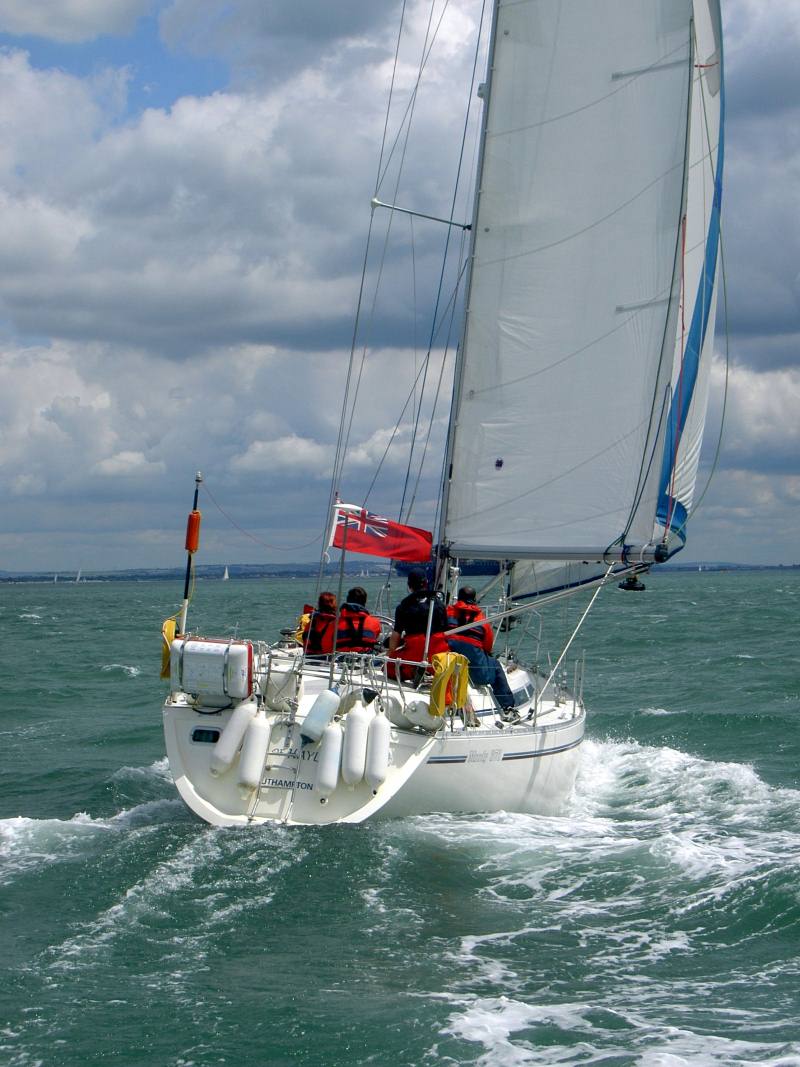
The photo was used under the Creative Commons license curtsey of Flickr.com
http://www.flickr.com/photos/nuttinbutlove/5892333256/
Filed Under: Blog, Learning to Sail, Sailing Holidays Tagged With: holiday, learning to sail, messing around in boats, sailing, sailing holiday

Yacht Masters Course – Certificate of Competence

May 30, 2012 by superuser Leave a Comment

Sailing is a fun and challenging activity enjoyed by many. It is a form of recreation which requires a high level of skill. While not many are able to afford their own boats, there is no reason why this activity should not be accessible for those even on a budget. In fact, these days there are boats that can be chartered for a short time to make sailing activities more affordable and enjoyable without worrying about costs. Since there are risks involved with sailing, it is necessary to undergo a yacht masters course to become competent in operating a vessel. There are different courses that will tailor fit the need of the person who wishes to be trained in sailing.

There are many sailing schools that offer courses for interested sailing enthusiasts. It is important to differentiate and understand what you are looking for in terms of a yacht masters course to ensure that you are making the most out of your investment. Look for courses that have the least student to teacher ratio. Since you will experience sailing firsthand, you should look for schools that have the best and the latest facilities and vessels. If you are a beginner, look for a yacht masters course that will provide you with the basics in day skipper training where you will learn how to man a vessel during the day and in favorable conditions. There are advanced training to fine tune your existing sailing skills as well.

If you want to achieve a certificate of competence, find a training program that is facilitated by RYA yacht master experts. RYA sailing training programs that will immediately lead to a certification examination is also ideal. The students will be trained in offshore and coastal yachting skills through various RYA sailing training programs. Oftentimes, accommodation on board the vessel will be provided by the school. If you are not comfortable sharing cabin accommodations with other students, you can opt for a course that provides students with individual cabins inside the vessel, but be prepared to pay for such a luxury.

There is information on the internet that will connect you to some of the best yachting and sailing schools in your area. You can research as much as you can if you are not sure of what course you are interested to take. Assess your skills and decide on the areas you need to improve. If you really want to take sailing as a serious form of recreation or hobby, you will greatly benefit from certified training courses for yachting and sailing.

More Info About Sailing Courses visit http://www.universalsailingschool.co.uk

A fully recognised RYA Training Centre offering the complete range of RYA practical sailing courses

Filed Under: Blog, Learning to Sail

What is the Day Skipper Qualification?

May 20, 2012 by superuser Leave a Comment

The Day Skipper qualification is one of the most widely recognised worldwide qualifications in sailing. Most yacht charter companies will insist that at least one person holds the Day Skipper qualification before allowing them to charter a yacht.

The Day Skipper qualification demonstrates that the holder has a basic level of skills in boat handling and navigation. The course has two parts – Theory and Practical courses – which take you from being a crew member to being able to confidently handle small to mid-sized sailing yachts in day light hours in familiar waters. It is assumed you are already a competent crew member before taking the Day Skipper.

Day Skipper Theory Course

The shore based course includes a lot of the basics for those new to sailing: nautical terms, how to handle ropes and anchors, plus critical safety information. The course involves a great deal of training on navigation, including the use of GPS and electronic charts, meteorology, collision regulations and safety procedures.

The course does not assume any level of knowledge but is proving both popular and useful for experienced crew as well as novices, who are keen to learn navigation skills so they can skipper a yacht for themselves.

The course is often split into weekend or evening classes rather than being delivered in one session of five days.

Day Skipper Practical Course

The Day Skipper practical course provides the practical skills and knowledge you need to make sure you are able to put all the theory you have learnt into practice. You will learn how to handle a yacht effectively which includes preparing to sail, manoeuvring and mooring.

During the Day Skipper Practical course you will also be responsible for plotting a course, and making sure the course is accurately maintained, as well as mastering the critical aspect of piloting in and out of the harbour.

Part of the course involves practising for emergencies, such as a man overboard or emergency towing, so that in a real life emergency both the skipper and the crew are able to respond quickly and efficiently.

The practical course takes 5 days to complete but assumes that you have at least some basic skills. It is therefore best if you have a week or two of practical experience on board a yacht or have completed the Competent Crew practical course previously, before undertaking this course.

The course can be taken over 5 consecutive days or split over 2 weekends (a short and a long).

What comes after Day Skipper Qualification?

You can go on to complete the Coastal Skipper or Yachtmaster courses if you are feeling inspired following the completion of the courses above. These courses give you the skills and knowledge you need to sail and navigate for longer periods of time and to sail further from shore, or even around the world! It’s a legal requirement that someone on board must have a VHF Radio Licence, obtained by taking a 1 day course. So you should be thinking about doing this before or after your Day Skipper courses

First Class Sailing offers the complete range of RYA Sailing courses including the Day Skipper practical and theory courses. They have centres in London, Southampton and Burnham (East Coast).

You can book sailing courses online at www.FirstClassSailing.com

Filed Under: Blog, Learning to Sail

Learning the ropes

January 2, 2012 by superuser Leave a Comment

Tying knots is an essential part of sailing. Most boats have plenty of rope, as rope is the most effective form of running rigging.   Today I won’t go into the details of knot tying, but rather I will refer you to simply the best website there is on knot tying.

There is no need to buy a book any more with resources like this, in fact I always found learning from static pictures rather difficult. Animated knots gives you clear visual guides to tying knots.

If you are a dinghy sailor, you can actually get away with just two knots. The figure of eight and the bowline. If you are sailing a bigger boat there are probably 3 or so more knots that come in handy.

Nothing beats practice, and the ability to tie a bowline on a bouncy boat, in the dark, is a definite bonus skill. So get that bit or rope and keep on practicing.

The site to visit is

Animated Boating Knots by Grog
Enjoy it, it is good.

Filed Under: Blog, Learning to Sail Tagged With: knots, learning to sail, ropes

Goal Setting – The Professional Approach

June 1, 2011 by superuser Leave a Comment

Goal Setting – The Professional Approach

Have you set any goals for the coming season? If you have, then well done – you are on the right track. Of all the things that full-time, professional sailors do that the rest of us weekend warriors do not do, structured goal setting is probably the most important. Fortunately it is also one of the less demanding activities (compared to, say, completing 10,000 perfect tacks). With the right approach it can be done quickly – and it can even be fun.

Why goal setting makes a difference

It’s not just about the time and money (and energy!) you have available, it’s how you spend those resources. For example, practising some boathandling exercises might be a better use of a day’s sailing than doing a couple of club races. Or maybe a day’s coaching is a better investment than buying a new jib.

Think about what you want to achieve, then set some specific goals. Goal setting has been shown to be a major factor in improving performance in almost every area of life; yet most of us still do not set any goals, let alone reach them. Maybe we are protecting ourselves: if we do not set goals we cannot fail at them! But that is lazy thinking and it brings only frustration.

So let’s look at setting some sailing goals – and planning how to achieve them.

Mapping out your road to success

Think about your long-term sailing goals. How exactly do you want to improve? What specific goal will motivate you to do everything you need to do to achieve it? Maybe you want to be so fit and skilled that you are ‘at one with your boat’ in all conditions; or maybe you just want to be able to compete in 25 knots without capsizing.

Try to stick to Performance and Process goals: those that depend entirely on your own efforts and abilities. You can set Outcome goals: winning a club series or a championship – or even an Olympic medal. But you have to accept that achieving such goals is not completely within your control.

You want to improve as much as possible with the talent, time and money you bring to the game, so aim high. Describe your goal in inspirational terms and write it down somewhere as your Main Goal. Once you know where you are going, you can start to work out how to get there. What’s most important in the goal-setting process is the journey you take to reach the desired outcome.

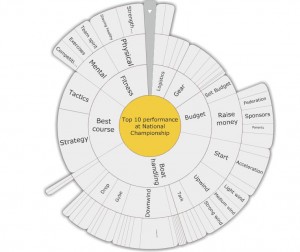
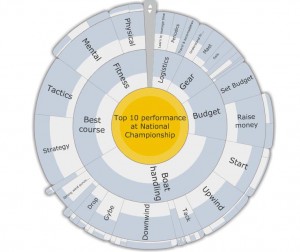
You can do quite a lot on paper – as long as you keep it somewhere safe and easily accessible. With decent software though, not only can you define goals and plans, you can also track your progress dynamically and adapt quickly. I like Goalscape (www.goalscape.com) because it can capture an entire campaign in a single picture (as shown in the screenshots that accompany this article) – and because it’s really easy to use.

Lots of sailors in Olympic classes use this tool, but in fact it can help anyone who is serious about improving their skills – and results.

Next year’s results depend on what you do right now

The best way to plan your route to your main goal is to break down your sailing into different areas and work out exactly what you need to do in each.

The fundamental ‘building blocks’ are always the same, whatever your current abilities and whatever your goals. In the diagram below these are the top-level subgoals around the main goal in the centre. (The size of each subgoal’s slice represents its relative importance.)

Three of these goals are about arriving at the starting line in the best possible shape:
• Logistics (planning the year: training, events, travel and accommodation, etc)
• Gear (hull, rig, sails, foils, fittings, clothing, etc)
• Budget (money available for equipment, events etc)

These goals are all about preparation. You can start thinking right now about what you need to do and how to do it.

The other three are about the abilities you need when racing:
• Boat handling (executing every skill in all conditions)
• Finding the best course (strategy and tactics)
• Fitness (mental skills, physical strength, balance, etc)

These are the core goals for maximising your performance on the water.

Define specific goals in each area and plan exactly how you are going to achieve them. Break down each subgoal area into further subgoals:

Keep breaking down the subgoals even further until you have defined specific actions to achieve them all. Below is a detail view of the ‘Boat handling’ area, showing the key aspects of boathandling that you need to master in order to race properly and the specific manoeuvres involved. (Can you guess what the ‘hidden’ one at 11 o’clock is?)

The full structure shown below is suitable for Olympic athletes and club sailors alike ( from time to time GoalScape make available these goal maps for sailors and other activities when you purchase their software, contact them for details of what currently they will offer for free).

You can adapt this framework to reflect your personal goals and circumstances – and to suit class-specific requirements. You might want to change the importance you assign to each goal, delete some lower level goals or even add some new ones of your own.

Focus your efforts

When you first do a proper goal setting exercise, it can be exciting when you see all the different areas where you can improve. It can also be overwhelming! A common mistake here is to go from doing nothing to trying to do too much all at once.

A good way to start is to identify a maximum of three areas that offer the greatest opportunity for improving your performance. How do you do that? One way is to think back through your last season, or even your last race. Be honest: what did you do well and what let you down? Where could you make the greatest improvements in the shortest time? If you capsized a lot when tacking in strong winds for example, you have an easy answer.

So if you can come up with three ideas for tacking more safely, then you can write them into your tacking process breakdown as subgoals:

1. Ease sails sooner before the tack
2. Steer more slowly through the tack
3. Move more quickly up to the new windward side

Work out some good ways to practise and how to measure your progress. If you train in a pair or a group, watch what the others do. Ask them to watch you and give you some specific feedback.

On the other hand if your boat handling is good but your race strategy is poor, look at your information-gathering and decision-making processes.

Find out how other people do all this: talk to some of the good guys – or visit a sailing forum. On Andy Rice’s www.SailJuice.com, anyone can ask a question: an expert contributor or another member will answer it; or Andy will ask some top sailors for their views.

Debrief thoroughly after each practice or competition. Be positive: agree where you have improved and how much. Update your written plan – seeing your progress advancing increases your motivation – and highlights what you need to prioritise next.

The chart below shows a team’s progress (darker shading) with a month to go before their nationals.

These guys need to keep practising their boat handling, especially in strong winds. They also need to do some serious work on their starting process and slow sailing skills. Better starts will help their first beats as well!

If you identify specific problems in every area and find three possible solutions for each of them (or just one!), you are already doing better than 95% of your opposition.

Stick at it!

Persist with this process of gradual, incremental improvements in the key areas of your game and your weaknesses will start to disappear. You may find that your old failings become your new strengths: each is a separate proof of the effectiveness of your process.

Soon you will enjoy doing the very things that you used to hate or fear. If you were nervous in strong winds you will be more competent and more confident: you will love racing in a breeze when you can stay upright while your rivals are falling over.

Double Olympic Champion Iain Percy once said: “I enjoy the process of improvement almost more than the winning itself. That’s where the real satisfaction comes. Identify your weaknesses, set goals, practise until you get better – and the results will look after themselves.”

So start setting some goals for your sailing right now. It is the single activity most likely to improve your performance and results, so there is simply no excuse not to do it. And don’t stop, even if you reach your goals – in fact especially if you reach your goals. Instead, set yourself new goals in every area – and start working on them immediately.

Richard Parslow & Andy Rice
© www.Goalscape.com & www.SailJuice.com

reproduced on www.sailfun.co.uk by kind permission of the authors

Filed Under: Blog, Learning to Sail Tagged With: goal setting, goal setting software, mind apping software, planning to win, training

Goalscape Discount and Promotional Codes

January 4, 2011 by superuser Leave a Comment

Goalscape is a great piece of software developed by Olympic sailors to really visualise goals. Of course goal setting is critical to becoming the best in the world in a sport, but this great piece of software has so many uses in ‘normal’ peoples’ personal and business lives.

We wrote about Goalscape as a goal setting tool in sailing here, where they describe in detail hour to set goals for a campaign and how to leverage goalscape to help visualise and track those goals.

Goalscape rarely, if ever, provide a goalscape discount, discount vouchers or promotional codes for their software. This is because their software is already great value for money, but for one day only they are giving 40% discount as a special promotion. They have offered a 40% discount for 1 day only.

You may already be too late, but pop over to www.goalscape.com  and see if you can grab a discount or deal (they offer educational / acedemic deals for Goalscape all year long). If you can’t don’t fret, download the free trial and give it a go, I’m convinced you would buy it even without the 40% discount. It won’t take much to get serious payback in terms of succeeding with your goals, using this software.

Goalscape has been adopted by many organisations and has multiple uses, beyond personal or business goal setting. The visualisation techniques really can help with managing project project, comparing products, selecting staff. The uses are pretty much endless. If you can get a Goalscape discount, because of an active special offer or Goalscape promotional code, then great for you.

Filed Under: Blog, Learning to Sail Tagged With: discount, goalscape, promotions

  • Page 1
  • Page 2
  • Go to Next Page »

Copyright © 2026 · Genesis Sample on Genesis Framework · WordPress · Log in